
Enlightenment Is Probably Buying Tomatoes
Why Grocery Stores Are Excellent Meditation Halls

PART IX
Ordinary Life Is the Only Monastery You’ll Ever Need
Dear UnMinders,
Have you ever entered the supermarket for milk and emerged with seventeen completely unrelated items, having spent five full minutes comparing two nearly identical brands of olive oil as though civilization depended on the outcome?
Today, Zen commits perhaps its greatest act of rebellion.
You do not need a monastery.
You need a shopping cart.
Because enlightenment has a peculiar habit.
It hides exactly where you refuse to look.
A young monk once asked his master,
“Where shall I go to find Truth?”
The master replied,
“The marketplace.”
The monk frowned.
“I meant somewhere sacred.”
The master smiled.
“So did I.”
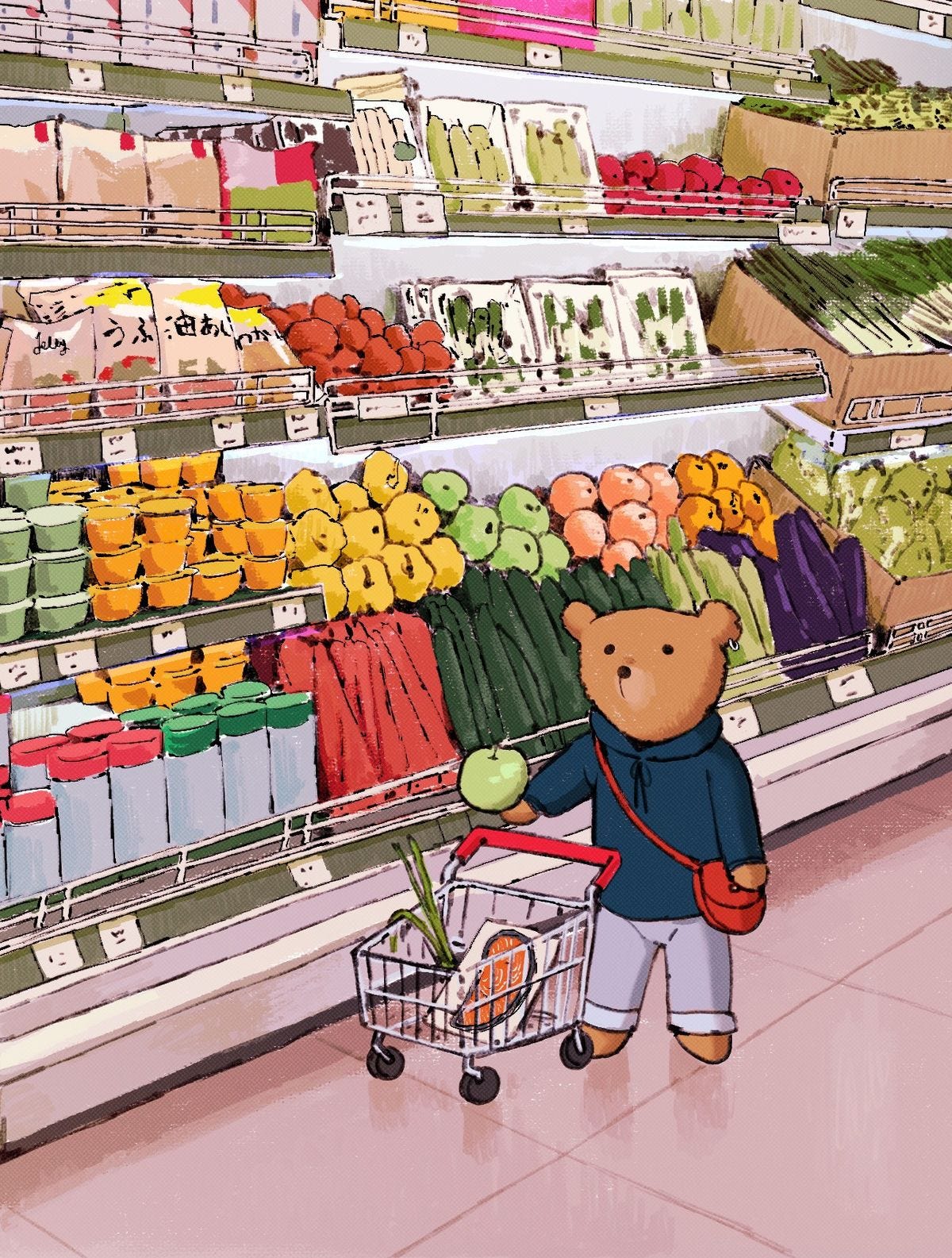
We have inherited a peculiar superstition. We believe spirituality happens elsewhere.
In temples. On mountain tops.
Silent retreats. Ancient caves.
Beside waterfalls that somehow know Sanskrit.
Certainly not in traffic.
Certainly not while buying potatoes.
And absolutely not beside someone squeezing every avocado in the produce section as though negotiating peace between nations.
Yet Zen keeps insisting...
this...is it.
Not because grocery stores are mystical.
Because awareness never checks locations before arriving.
Meet Daniel. He loved meditation retreats. Ten days of silence.
No phone. No meetings. No notifications.
Just birds, breathing, and profound insights.
He always returned home radiant. But by tuesday afternoon...
he was arguing with strangers over parking spaces.
His enlightenment had a surprisingly short warranty.
Frustrated, he visited an elderly Zen teacher.
“I can be peaceful in a monastery.”
The old man nodded.
“Most people can.”
“I lose it in ordinary life.”
“Exactly.”
“So what should I do?”
The teacher smiled.
“Buy bananas.”
Daniel waited.
Surely there was more.
There wasn’t.
The next morning Daniel found himself in a supermarket. Normally he hurried.
Today he remembered the words of the teacher.
Buy bananas.
Nothing more. Nothing less.
He picked up the fruit slowly.
Felt its weight. Noticed its colour.
The strange elegance of something grown from sunlight and rain.
Then someone rammed a shopping cart into his ankle.
Hard.
His enlightenment immediately filed for divorce.
That is precisely where Zen begins.
Not when life is quiet.
When it isn’t.
Anyone can remain peaceful when everyone behaves beautifully.
Try remaining awake when the toddler in aisle four has declared war on existence.
That...is advanced practice.
There is an old Zen koan.
A monk asked,
“What is the Way?”
The master answered,
“Your everyday mind.”
The monk asked,
“Should I try to improve it?”
The master replied,
“If you try to improve it,
you’ve already left it.”
The grocery store is an astonishing laboratory.
Observe carefully.
One person cuts in line.
Instant irritation.
The cereal you wanted is sold out.
Tiny disappointment.
Someone blocks the aisle with remarkable commitment.
Impatience arrives.
You compare yourself to another shopper.
Desire appears.
A child laughs.
Joy appears.
The bakery smells wonderful.
Craving appears.
Nothing is wrong.
Everything is revealing itself.
The supermarket is not interrupting your meditation. It is conducting it.
Zen has never been interested in creating special states.
It wants to illuminate ordinary ones.
Because if awareness only functions inside silence,
it is remarkably fragile.
But if it survives fluorescent lighting, crying babies, discount announcements,
and someone loudly discussing cryptocurrency beside the frozen peas...then something real is happening.
One afternoon Daniel returned to the teacher.
“I noticed something.”
The old monk poured tea.
“My mind never stopped talking.”
The teacher nodded. “What did it say?”
“It judged everyone.”
“Wonderful.”
“It compared.”
“Wonderful.”
“It complained.”
“Wonderful.”
Daniel looked horrified.
“Master...none of that sounds wonderful.”
The old man smiled.
“No. But noticing it is.”
Awareness is wonderfully democratic.
It judges nothing.
It simply notices.
The mind says,
“This person is annoying.”
Awareness notices.
The mind says,
“I’m becoming more spiritual.”
Awareness notices.
The mind says,
“I’m terrible at this.”
Awareness notices that too.
It takes no sides.
It signs no petitions.
It simply illuminates.
A monk asked Master Yunmen,
“What is Buddha?”
The master replied,
“A sesame bun.”
Imagine spending twenty years climbing mountains to hear...”bread.”
Yet perhaps Yunmen understood something we forget.
The sacred has no preferred costume.
Sometimes it arrives wrapped in silence.
Sometimes in carbohydrates.
Weeks passed.
Daniel continued shopping differently.
Not slower. More honestly.
He watched impatience arrive. Then leave.
He noticed gratitude appear unexpectedly while holding a loaf of warm bread.
He smiled at cashiers instead of treating them like furniture.
He looked people in the eyes.
He discovered something embarrassing.
Most of his suffering had nothing to do with groceries.
It came from arguing with reality. The grocery store simply exposed the argument.
One rainy afternoon he saw an elderly woman struggling to reach something from the top shelf.
He quietly helped her.
She smiled. “Thank you.”
That was all.
No mystical vision.
No heavenly choir.
No cosmic download.
Just kindness.
Walking away, Daniel suddenly understood.
Presence isn’t dramatic. It is available.
The Buddha did not spend forty-five years teaching people how to have extraordinary meditation experiences.
He taught them how to stop suffering in ordinary life.
That changes everything.
Meditation isn’t preparation for living.
It is learning how to live.
A Grocery Store Meditation
The next time you shop, don’t try to become peaceful.
Become curious.
Leave your phone in your pocket.
Walk normally. Breathe naturally.
Let the supermarket become your monastery.
Notice the colours before the labels.
Notice the sounds without naming them.
Feel the weight of the basket in your hands.
Watch how quickly the mind begins commenting on everything.
“This line is too long.”
“Why is he walking so slowly?”
“I forgot the milk.”
Don’t stop the thoughts.
Just notice them arriving...and disappearing.
Smile at strangers.
Thank the cashier as though they are the most important person you will meet today.
Because for this moment...they are.
Carry your groceries with the same care you would carry sacred offerings.
After all, they are.
Somewhere, sunlight became wheat.
Rain became apples.
Soil became tomatoes.
Entire galaxies collaborated so you could make dinner.
Eat accordingly.
Months later Daniel laughed when people asked,
“Where do you meditate?”
He replied, “Mostly near the vegetables.”
They assumed he was joking.
He rarely corrected them.
Zen has a dangerous habit.
It keeps collapsing the distance between the ordinary and the divine.
Between Tuesday afternoon...and eternity.
Between buying onions...and awakening.
The ego wants enlightenment to be rare.
Reality keeps making it embarrassingly common.
Every checkout line is a chance to practice patience.
Every empty shelf is a lesson in impermanence.
Every smiling stranger is a reminder that we belong to one another.
Every ordinary errand is quietly asking the same ancient question…
Were you actually here?
Not physically.
Spiritually.
Did you taste your life...
or merely complete another task?
Because one day,
without warning,
you will place your final loaf of bread into your final shopping basket.
You will stand in your final queue.
You will smile at your final stranger.
Zen does not tell us this to frighten us.
It tells us because nothing awakens gratitude faster than remembering that even the ordinary has an expiration date.
So buy the bananas. Carry the tomatoes. Wait in line.
Help someone reach the top shelf.
Laugh when your shopping cart squeaks like an offended duck.
And if, somewhere between the bread aisle and the checkout counter, you suddenly feel an inexplicable stillness...don’t look for a hidden monastery.
You already found it.
It just happened to have a sale on avocados.
Thank You for UnMinding,
Manpreet Singh
If something here has added even a small spark of value to your life,
your support would be deeply appreciated.
With heartfelt gratitude. 🤍
I smiled reading this. I sometimes think we imagine enlightenment as escaping ordinary life, when perhaps it's becoming fully present within it. Washing the dishes, making tea, sitting quietly, having an honest conversation. These moments can become profoundly transformative when we're no longer rushing through them to reach somewhere else. Maybe awakening isn't leaving the human experience behind. It's inhabiting it more completely.
I met a Buddha near the freezer section, but he just didn't know that he was one. He was younger than I imagined.